


Why first presentations go wrong
Usually it is not the design. It is the order things were shown in. A client sees a beautiful render on slide two, decides how they feel about the colour of the chairs, and spends the next forty minutes on chairs. The plan, the budget and the idea that holds the whole thing together never get a proper hearing.
A good concept presentation is a short argument: here is what you asked for, here is the idea that answers it, here is what that idea looks like in your space, here is what it will take. The images support the argument. They are not the argument.
A running order that works
For a first concept meeting, this order holds up whether it is a café, an office floor or a boutique hotel lobby.
- The brief, in your words (1 or 2 slides). Repeat back what they need: users, goals, budget band, dates, the things that must not change. If you have misunderstood something, you find out now, before they have seen a single image. If you do not have a written brief yet, write one first.
- The idea (1 slide). One or two sentences, and a name. "The Long Table" is easier to remember and defend than "Option A". A short concept statement belongs here.
- The mood (1 or 2 slides). Palette, three to five key materials, a few reference images. Keep it to the feeling. It is not yet a finish schedule.
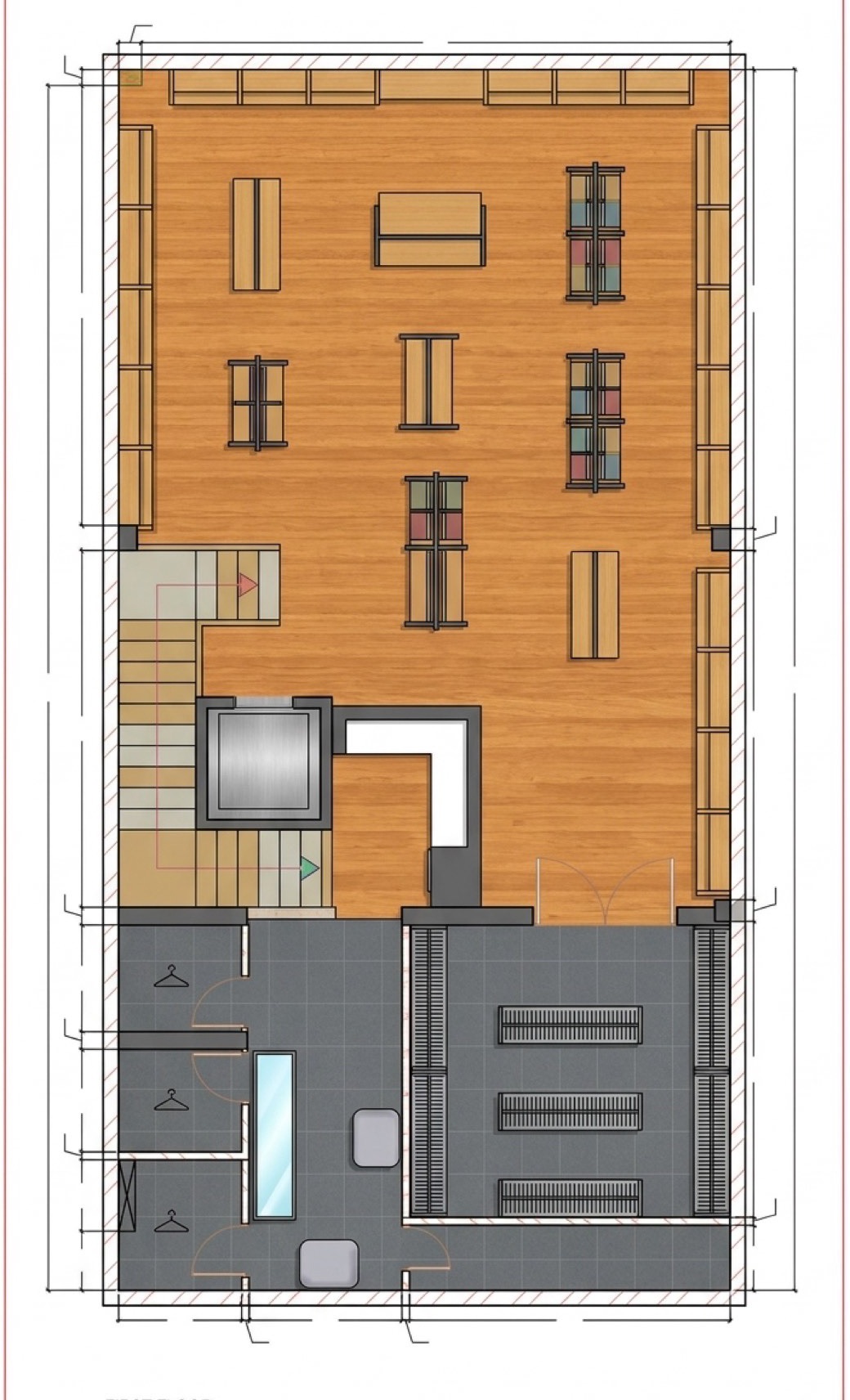
- The plan (2 to 4 slides). Show how people move through the space before you show what it looks like. A coloured presentation plan reads far better for a client than a CAD drawing.
- The views (4 to 8 slides). Each view should answer a question from the brief: "this is what a customer sees when they walk in", "this is the bar at 9 pm".
- Cost and programme (1 or 2 slides). A range, what drives it, and the next decision dates.
- Decisions needed (1 slide). What you need from them to move to the next stage. End on this, not on a pretty image.
One concept or three?
I would bring one, or two at most, and here is why. With three or more options, clients stop judging against the brief and start shopping. They like the floor from A, the lighting from B, the joinery from C, and you leave with a Frankenstein brief and a redesign.
If you do bring two, make them genuinely different answers to the brief, not two colourways. "Open and social" against "quiet and private" is a real choice. "Oak or walnut" is a detail you can settle later.
A useful middle ground: one concept, with two or three variations on the detail that matters most to this client. It keeps the idea intact and still gives them a choice.
Handling feedback in the room
- Ask what they would change first. Silence is not approval. It usually means they are being polite or they are lost.
- Turn taste into reasons. "I don't like the green" often means "it feels cold" or "it is our competitor's colour". Ask which. The fix is different.
- Write decisions down live. On a slide, a shared doc or paper. Read them back before everyone leaves.
- Do not redesign in the meeting. Show a quick variation if it helps them decide, but agree the direction and go away to do the work properly.
- Be honest about the images. Say which parts are indicative. If a render was made with AI, call it a visualisation of the direction. Clients forgive an image that is clearly a sketch; they do not forgive a promise.

What to send afterwards
Within a day, send a short email with the deck attached and three headings: what we agreed, what is still open, and what happens next (with dates). It sounds like admin. It is actually the most valuable page of the whole presentation, because it is what everyone will refer to in three months' time when someone asks why the floor is terrazzo.
Preparing it faster
Most of the hours in a concept presentation go into images and layout, not thinking. A few things that cut that down:
- Keep one deck template with the running order above already in it.
- Turn the CAD plan into a coloured plan instead of drawing one. Here is how we do it with AI.
- Make views from your own model or sketch, so they match the plan. See our guide to AI rendering for architects and designers.
- Draft the concept text with the free Concept Statement tool (it has an Architect voice), then rewrite it until it sounds like you.
If you work on shops, cafés, salons or showrooms, RetailDesign.ai can also assemble a first client deck from the images in a chat: a cover, the concept, a captioned slide per image and the palette, which you then edit. It is a starting point, not a finished presentation. The thinking in the running order above is still yours to do.
FAQ
How many design options should I show a client?
Usually one strong concept, or two clearly different directions at most. Three or more options tend to turn the meeting into a beauty contest, and clients often ask you to combine them. If you show two, explain what each one is for, not just how it looks.
Should I send the presentation before the meeting?
Send a short agenda before, and the full deck after. If clients see the images cold, they judge them without the story that explains them. Walk them through it first, then send the PDF with the decisions you agreed.
What should a concept presentation include?
The brief in your own words, the idea in one or two sentences, a mood or material board, the plan, a few key views, what it might cost and what happens next. Put the plan before the renders so the images make sense.
How long should a first concept presentation be?
Plan for around 45 minutes of presenting and discussion, with about 12 to 20 slides. Leave at least a third of the time for the client to talk. If they are silent, ask what they would change first.


